

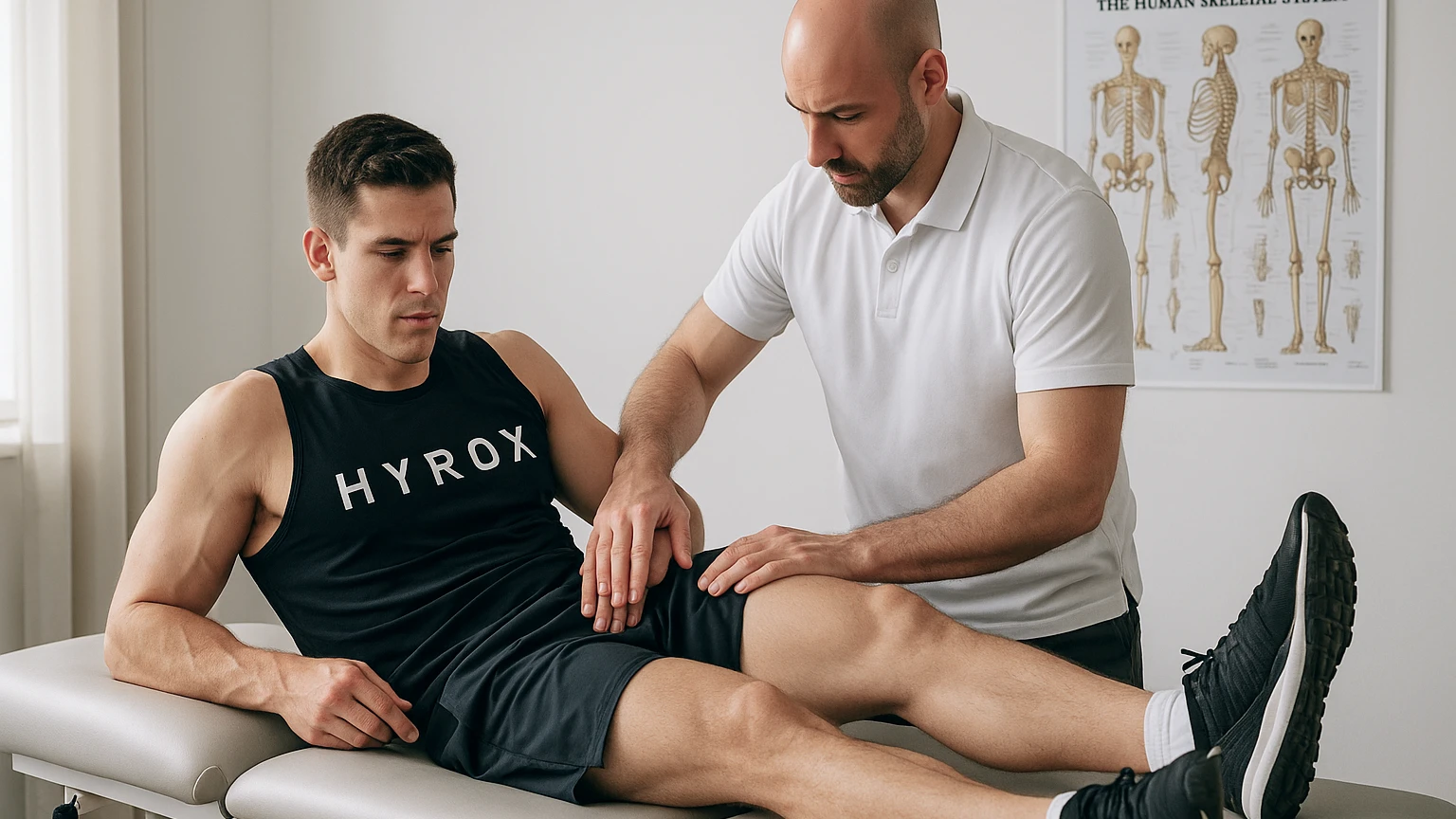
HYROX has become one of the fastest growing fitness races in the world. The blend of running and functional strength stations creates a unique physical challenge that tests every part of your body. Whether you race in the Pro category or you are taking on your first Open event, the training load and race intensity place significant demands on your muscles, joints and recovery systems.
As a Sports Osteopath based in Tunbridge Wells, I see more and more athletes who are preparing for HYROX or dealing with tightness, niggles and fatigue after race day. The sport rewards good fitness, but it also exposes movement inefficiencies, overuse patterns and gaps in strength or control. The good news is that targeted osteopathic treatment, combined with a smart training plan, can help you recover more quickly and prepare more effectively for your next race.
For a deeper overview of the sport, you can explore the HYROX hub at RB100.Fitness:
HYROX Series: The Complete Guide To Hybrid Racing
Why HYROX Places Unique Demands On The Body
HYROX is not a typical endurance event and not a typical functional fitness competition either. The repeated alternation between 1 km runs and high output strength stations creates predictable stress patterns in the body:
-
Hip flexors and calves work hard during repeated running intervals.
-
Grip and shoulders fatigue during the SkiErg and Farmers Carry.
-
The lower back and hips work under load during sled push, sled pull and wall balls.
-
Knees and ankles take increased impact from running under fatigue.
-
Breathing becomes harder as muscular fatigue rises during later stations.
These are exactly the areas where a Sports Osteopath can make a measurable difference to both recovery and performance.
If you are new to HYROX, this article from RB100.Fitness is a useful starting point:
What Is HYROX? The Complete Beginner’s Guide
How Sports Osteopathy Supports Fast HYROX Recovery
1. Restoring Joint Mobility After Sled Work
The sled push and pull stations create significant compression and tension across the thoracic spine, hips and ankles. Many athletes finish a race with restricted rotation, stiff hip flexors or reduced ankle dorsiflexion. If these restrictions are left untreated, they often limit running efficiency in the next training block.
Osteopathic treatment can help to:
-
Free the thoracic spine to support better breathing mechanics.
-
Improve hip extension and reduce tightness at the front of the hip.
-
Rebalance ankle mobility so the knees and feet share load more evenly.
HYROX training guides from RB100.Fitness emphasise the importance of efficient running between stations. Better mobility supports this. See:
HYROX Running Engine: How To Hold Pace Across 8 x 1 km
2. Reducing Shoulder And Upper Back Tension
SkiErg, rowing, burpees and Farmers Carry all create a high workload for the shoulders, lats and upper back. Tightness here can affect overhead mobility, breathing and arm drive.
Sports Osteopathy helps by:
-
Releasing the lats, pecs and upper trapezius.
-
Improving rib and thoracic mobility.
-
Reducing neck tension that builds under fatigue.
This often leads to easier breathing, a more relaxed upper body and more balanced arm swing when you return to running and gym work.
3. Managing Lower Back And Hip Tightness
Wall balls, walking lunges and compromised running are tough on the hips and lower back. Under fatigue, the body starts to compensate. Some muscles overwork while others switch off.
Treatment focuses on:
-
Reducing lumbar spine stiffness.
-
Re-engaging the glutes and deep hip stabilisers.
-
Improving pelvic control for smoother and safer movement patterns.
A well designed HYROX strength plan, like the ones outlined at RB100.Fitness, works even better when the body can move freely:
HYROX Strength Standards: Are You Race Ready?
4. Supporting Nervous System Recovery
HYROX races are intense for both body and nervous system. Athletes often report poor sleep, heightened tension and feeling “wired but tired” in the days after competition.
Gentle manual techniques, breathing strategies and basic recovery advice can help:
-
Settle the nervous system.
-
Improve sleep quality.
-
Reduce muscle guarding.
-
Support a smoother transition back into structured training.
Preparing For The Next HYROX With A Sports Osteopath
Recovery is only half of the picture. The other half is preparation for your next race.

HYROX athlete performing single leg squat assessment next to sports osteopath
1. Movement Screening For Weak Links
Before you increase training load again, it is sensible to screen:
-
Hip stability and single leg control.
-
Foot and ankle mechanics.
-
Thoracic spine and rib mobility.
-
Shoulder control under load.
-
Running gait, ideally when slightly fatigued.
Small inefficiencies become big problems when repeated across months of HYROX training. Identifying them early allows you to adjust training rather than wait for pain to appear.
For balanced programming ideas, RB100.Fitness offers detailed training articles such as:
How To Train For HYROX: Building Hybrid Strength And Endurance
and
Zone 2 For HYROX: Aerobic Base That Does Not Steal Speed
2. Improving Running Between Stations
Efficient running is one of the biggest performance advantages in HYROX. Even modest improvements to stride, hip extension and posture can save a lot of time over eight kilometres.
As a Sports Osteopath I focus on:
-
Reducing stiffness that interferes with natural stride.
-
Improving hip extension and glute engagement.
-
Encouraging a relaxed but active upper body.
Combined with structured running plans, like the guides on RB100.Fitness, this helps you hold pace for longer and arrive at each station in better shape:
HYROX Threshold Training: Field Tests And Weekly Sessions
3. Planning Back To Back Races Or A Full HYROX Season
Many athletes now race HYROX multiple times per year. The recovery window between events or training peaks can be tight.
A targeted osteopathic plan can:
-
Reduce cumulative fatigue.
-
Shorten the time needed to feel “normal” again.
-
Help manage niggles before they become injuries.
-
Support consistent training across the whole season.
For a broader view of HYROX season planning and mindset, this article series is useful:
The HYROX Mindset: Training Your Mental Game For Hybrid Racing
How Often Should HYROX Athletes See A Sports Osteopath?
There is no one answer, but a useful structure for many athletes is:
-
Pre season or pre event movement assessment.
-
A small number of sessions to address clear restrictions or pain.
-
A race recovery session within 3 to 10 days after competition.
-
Occasional check ins during heavy training phases or when niggles appear.
If you are local to Tunbridge Wells, you can learn more about my clinic and Sports Osteopathy services here:
Sports Osteopathy In Tunbridge Wells
or visit the main site:
Final Thoughts
HYROX is a demanding and rewarding test of strength, endurance and resilience. The right recovery and preparation plan helps you stay consistent, avoid unnecessary setbacks and arrive at the start line feeling ready, not overworked.
Sports Osteopathy fits naturally into this process by improving movement quality, reducing pain and tightness, and supporting your body between training blocks and races.
If you are preparing for a HYROX event, or want help with recovery after a race, you can arrange an appointment at my Tunbridge Wells clinic. Together we can build a plan that supports both your performance and your long term joint health.
To book or find out more, visit:
https://osteopathtunbridgewells.co.uk/